Heat pump vs gas boiler

Ryan Gill - Engineer
As energy bills continue to rise¹, and more and more news stories talk about heat pump grants, many people have started to ask, 'Should I replace my boiler with a heat pump?' Well, you've come to the right place. In this article, we explain the pros and cons, efficiency, running costs, and more of each product to help you make the best decision. Let's get started.
Heat pump vs gas boiler quick summary
Running short on time? Read our quick summary on whether to choose a heat pump or gas boiler.
Choose a heat pump if your boiler has reached the end of its life, your home has excellent insulation, and there is sufficient space for the internal hot water cylinder and external unit. Alternatively, if your home has no mains gas line, LPG tank, or oil tank you may benefit from a heat pump.
Choose a gas boiler if you’re not planning to upgrade your home’s insulation or central heating system soon, and you have limited space for the internal and external units.
Check out BOXT's flowchart on choosing a heat pump or gas boiler for your home


What is a heat pump?
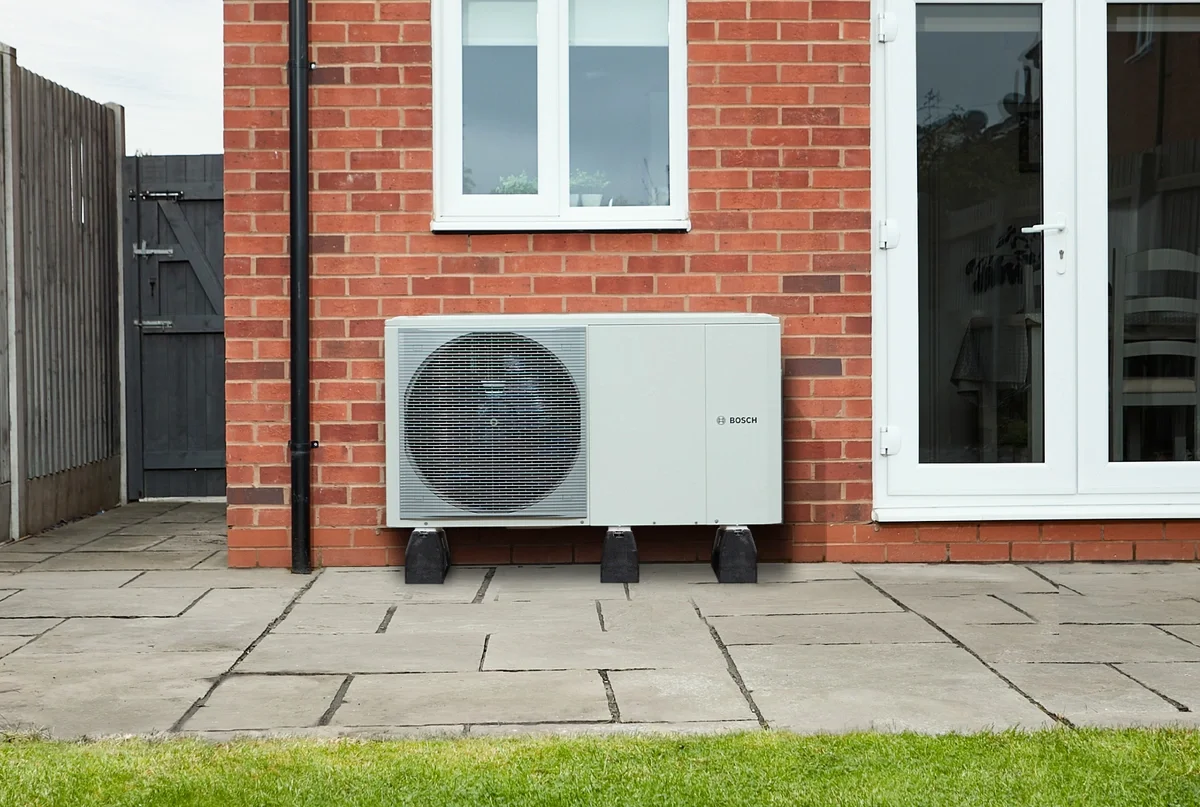
Heat pumps are a highly energy-efficient and low-carbon alternative to gas or oil boilers. They work by transferring heat from an external source inside a home, using a refrigerant.
The whole process works like a refrigerator, but in reverse; the refrigerant absorbs external heat, is transformed into a gas, and is then compressed. This compression raises the temperature of the gas, making it suitable for use as heating or hot water. Afterwards, the gas cools, the refrigerant returns to a liquid state, and the cycle continues.
Please note that while this article will focus on air source heat pumps, there are three different types available:
-
Air source heat pumps (ASHP) extract heat from the air
-
Ground-source heat pumps (GSHPs) extract heat from the ground
-
Water source heat pumps (WSHP) extract heat from a local lake or river
What’s the difference between a heat pump and a gas boiler?
Beside their appearance, there are a number of key differences between heat pumps and gas boilers. These include home suitability, operation, energy source, output, and more. Let’s take a look.
Which homes are best suited to a heat pump?
Newly built homes are typically ideal for heat pumps, as they are designed to be more energy-efficient. Other types of property can usually accommodate one after a few adjustments – this often includes upgrading the insulation and installing a new heating system for:
-
Newly renovated homes
-
Properties built after 1900
-
Homes not connected to the gas grid
While many homes can be made suitable for a heat pump, certain properties present more challenges. These include:
-
Grade one and two listed properties. These homes can be difficult to install a heat pump since the outdoor unit must be placed in a discreet location to comply with regulations.
-
First floor flats. These properties often cannot accommodate a heat pump due to the limited ground space for the outdoor unit.
-
Large homes over 250 square meters without the recommended level of insulation. A single heat pump may not be sufficient, and a double system may be required.
How to prepare a home for a heat pump
Unlike combi boilers, which are compatible with most older heating systems, homes looking to install a heat pump will require more extensive retrofitting to deliver energy-efficient heating and hot water.
If you're seriously considering replacing your boiler with a heat pump, use the following list as a checklist to see if your home is ready:
-
Excellent insulation, ideally, your home's EPC (Energy Performance Certificate) rating should be D or above
-
Draught-proof doors and windows throughout the home
-
Large, plumbed-in radiators or underfloor heating
-
An indoor space, approximately 1m x 1m x 2m
-
An outdoor area, approximately 1m x 1m x 2m, plus adequate space for air circulation
-
A backup system (like a boiler) if you live in an extremely cold climate, as some heat pumps struggle to function
Top tip: The best time to install a heat pump is when your boiler has reached the end of its life. If possible, plan to do this in summer, while your central heating system is switched off.
The pros and cons of a heat pump
Heat pumps are known to lower a home’s energy bills and carbon emissions. However, they come with higher upfront installation costs than a boiler and can require several home upgrades.
| Pros | Cons |
|
Extremely energy efficient: Some heat pumps can achieve up to 300% efficiency. |
Decreased efficiency in extremely cold temperatures: Your home may require a backup heating system, like a boiler. |
|
Reduced energy bills: They typically have lower maintenance and running costs compared with oil, LPG, or electric systems. |
Greater upfront cost: A heat pump installation typically costs £4,799 - £14,899². While a boiler installation with BOXT ranges from £1,790 - £4,000². |
|
Greater safety: Eliminate the risk of gas leaks and carbon monoxide poisoning associated with gas boilers. |
Complicated installation: They need more organisation than a boiler upgrade and may require additional investment in radiators or insulation. |
|
Heating and cooling: Many modern systems combine heating and cooling in one unit. |
Space: The indoor and outdoor units require lots of space, while the outdoor unit needs additional space for airflow, which can be challenging for homes with a limited outdoor area. |
|
Environmentally friendly: Reduce your home's carbon emissions with ease. |
Additional noise: Some outdoor units produce a small amount of noise, ranging from 40 to 60 decibels – the equivalent of a working dishwasher. |
|
Compatible with solar panels: Providing you with free electricity. |
Requires electricity: You’re reliant on the changing price of electricity. |
|
Greater running costs: Electricity is roughly 4x more expensive than gas.³ |
Which homes are best suited to a gas boiler?
Gas boilers are well-suited to most homes with a mains gas connection. The right type of boiler depends on your property’s size, hot water demand, and existing plumbing system. For example:
-
Small to medium-sized homes, such as flats, apartments, or houses with up to three bedrooms and up to two bathrooms, that feature good mains water pressure generally benefit from a combi boiler.
-
Larger homes with two or more bathrooms and a high hot water demand will often benefit from a system or regular boiler, as these can store hot water in tanks ready for use.
-
Properties with an older heating system or those with a low mains water pressure are usually most compatible with regular boilers. This is because they already have the correct tanks and pipework in place from a conventional system.

The pros and cons of a gas boiler
Gas boilers provide homes with powerful, cost-effective heating and hot water with ease. In fact, combi boilers are one of the UK’s most popular boilers, having been installed in up to 80%⁴ of homes. However, they also come with disadvantages, like their reliance on gas and greater environmental impact compared with heat pumps.
| Pros | Cons |
|
Cost-effective: They’re cheaper to buy than a heat pump. And are typically cheaper to run than electric boilers. |
Reliant on gas: They must be connected to the gas grid or have an LPG storage tank. |
|
Fast and powerful: They can easily provide hot water and heating to small and medium sized homes. |
Higher emissions: They release carbon dioxide, making them less environmentally friendly than heat pumps. |
|
Lower installation costs: If a home has a gas line and a boiler will be installed in the same location, the installation fee can be as low as £1,790² with BOXT. |
Potential safety risk: They require a Gas Safe registered engineer to safely install and perform the annual service to protect against carbon monoxide and gas leaks. |
|
Reliable: With regular servicing, they can last up to 15 years. | |
|
Space requirements: Combi boilers are one of the smallest gas boilers. Some models are compact enough to fit inside a kitchen cupboard. | |
|
Lots of choice: Easily find the right solution for your home and budget. | |
|
Lower running costs: A recent study has found that gas is roughly 4x cheaper than electricity.³ |
Heat pump vs boiler comparison
From carbon emissions to energy efficiency, and from energy sources to installation costs there are countless differences between heat pumps and boilers.
| Gas boilers | Heat pumps |
|
Natural gas energy source |
Electricity energy source |
|
Provides heating |
Provides heating and cooling |
|
Up to 98% energy efficiency |
Up to 300% energy efficiency |
|
2,500kg average annual carbon emissions |
850kg average annual carbon emissions |
|
No grants available |
£7,500 grants from the UK government's Boiler Upgrade Scheme (BUS), available for homeowners in England and Wales. Ends March 31st, 2028. £2,500 discount off air-to-air heat pumps as part of the government's Boiler Upgrade Scheme (BUS), available for homeowners in England and Wales. Ends March 31st, 2028. £7,500 grants from the Home Energy Scotland Grant and Loan Scheme, available for homeowners in Scotland. Available on a first-come first-served basis. |
|
20% VAT |
0% VAT |
|
£760 - £1,700 average annual running costs |
£550 - £1,100 average annual running costs700 average annual running costs |
|
One day average installation time |
One week average installation time |
|
BOXT’s one-year workmanship guarantee Up to 12 years manufacturer warranty |
BOXT’s two-year workmanship guarantee Up to 7 years manufacturer warranty |
Upfront vs lifetime running costs of a heat pump and gas boiler
A new gas boiler installation can cost up to £4,000, and has a lifespan of up to 15 years. While a heat pump installation can cost up to £13,000 and generally comes with a lifespan of 15-20 years.
This is a significant difference, which is why it's important to take some time to examine each product's annual running costs to determine whether the investment is worthwhile for your home.
Another consideration is a product's real-world efficiency versus its laboratory-based performance. With one source reporting that heat pumps need a seasonal coefficient of performance (CoP) above 3 to match gas boilers. However, in winter, some air source heat pumps can drop to a CoP below 2, which means far higher electricity consumption.⁷
Are gas boilers being phased out?
At the time of writing this guide in March, 2026, we can confidently say that gas boilers are not being phased out. Currently, up to 1.7 million gas boilers are installed annually in the UK, while the government anticipates a further 10 million to be fitted in homes by the end of 2035.⁸
Can a heat pump replace a boiler?
Heat pumps can be a great investment for some households under the right conditions, and we would recommend considering one, if:
-
Your home has space for the internal hot water cylinder and your garden has sufficient room for the external unit
-
You have the spare budget to invest in the proper insulation, a compatible central heating system, and a higher electricity payments
-
You'd like to lower your home's carbon emissions
Interested in getting a quote? Get your free, fixed-price heat pump installation quote here.
If you’re unsure whether to upgrade to a heat pump, then we'd recommend staying with a boiler. But upgrade to the most energy-efficient model with the longest warranty to save more money over its lifetime.
If your boiler is working perfectly well, we recommend reassessing your situation as it approaches the end of its lifespan. This gives you the advantage of taking your time to research the right kind of heat pump for your home. And if you choose to install one, you can plan its installation for a convenient time. Take a look at our fixed-price installation quotes here.
For more advice, visit this link to speak with one of our experts over the phone, talk to us on Live Chat, or arrange a call back.
¹https://www.theguardian.com/money/2026/mar/20/household-energy-bills-in-great-britain-could-rise-iran-war-shock and https://news.sky.com/story/energy-bills-to-rise-hundreds-of-pounds-to-three-year-high-13522104
²Prices correct as of March, 2026
⁷https://www.thegreenage.co.uk/air-source-heat-pumps-are-definitely-not-the-answer/