How to bleed a radiator


Will Scholfield - Engineer
If your radiators are only warming up towards the bottom or making gurgling or rattling noises as they heat, then it’s time to bleed your radiators. Or, in other words, release the trapped air from inside your system and allow it to heat more efficiently.
This quick task can be completed in a couple of minutes, with or without a bleed key.
Watch our video on how to bleed a radiator

How to know if your radiator needs bleeding
It’s easy to spot when your radiators need bleeding:
-
There are cold patches near the top of the radiator when your heating is on
-
Your radiators make gurgling, gulping, or rattling noises when warm
-
There are damp or condensation patches above or around your radiator
When to bleed your radiators?
We recommend bleeding radiators at most, twice a year, with one of these occasions being in autumn. This will help you resolve any issues before the colder months arrive, keeping your home warmer and your boiler more efficient.
Do you bleed radiators hot or cold?
Always bleed your radiators while your central heating system is off, and your radiators are cold. Otherwise, hot water could spray from the valve or even draw more air into the system. Your radiators only need to be on to help you identify which ones require bleeding.
Which radiator to bleed first?
If multiple radiators require bleeding, always start with the one furthest away from your boiler. And if your house is more than one storey, bleed those downstairs first.
How long does it take to bleed a radiator?
This usually depends on the size of the radiator and the amount of air trapped inside. However, it usually takes up to 30 seconds.
What equipment is needed to bleed a radiator?
-
A radiator bleed key (these are easy to purchase at most DIY shops) or a flat head screwdriver
-
A cloth or old towel to lie below your radiator and catch any leaking water
-
A bowl to catch water
A step-by-step guide on how to bleed a radiator with a key
Step 1 – Identify and prepare your radiators
Before you begin, identify the radiators with cold patches. You can do this by running your hand over a hot radiator to feel for any temperature variations and listening for unexpected sounds.
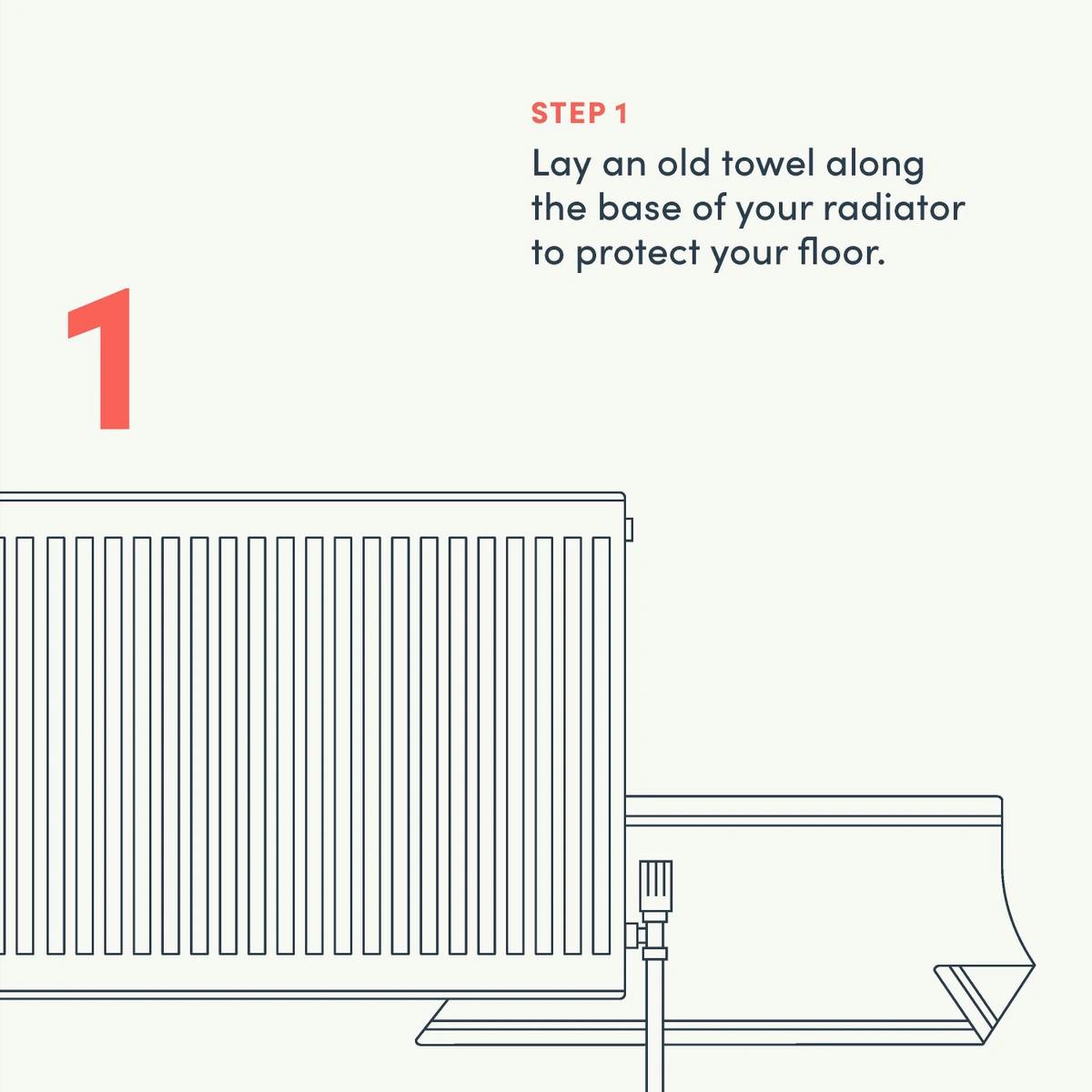
Next, lay an old towel or cloth at the base of your radiator below the bleed valve to protect your floor or carpet.
Top tip: Double-check how to repressurise your boiler before getting started. If not, bleeding your radiators may cause the pressure to drop too low, and prevent your boiler from firing up afterwards.

Step 2 – Bleed your radiators
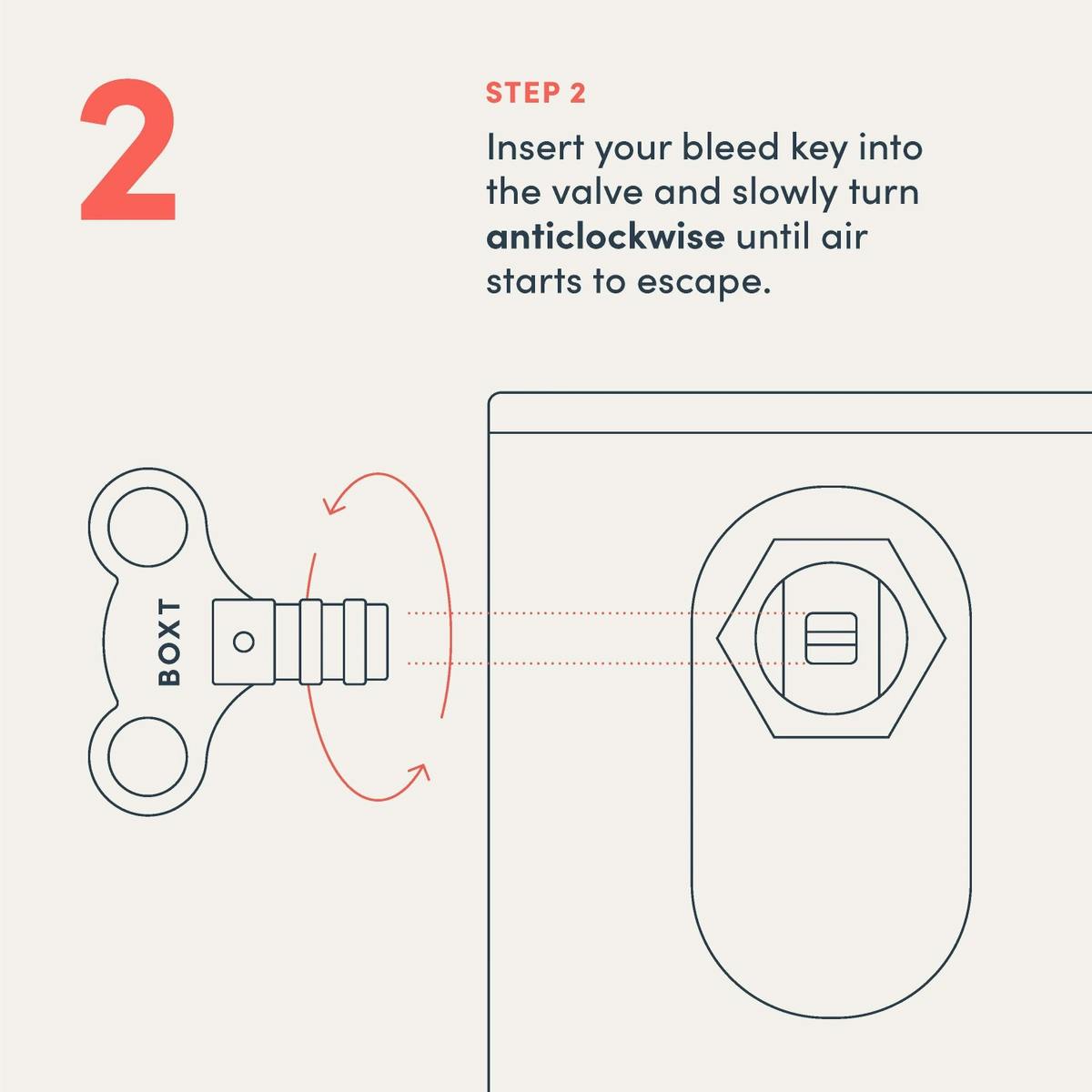
While your radiators are cold, use one hand to hold a bowl under the valve, then use your other hand to insert the bleed key. Turn the key slowly anticlockwise until you can hear a faint hiss as the air escapes.
Top tip: Around the outside of most bleed valves is a circular piece of plastic with a small hole. This piece of plastic can be rotated 360°, allowing you to choose the direction in which the water will emerge. We recommend angling this downwards and away from the wall, making it easier for you to catch the water in your bowl.

Step 3 – Tighten your bleed valve
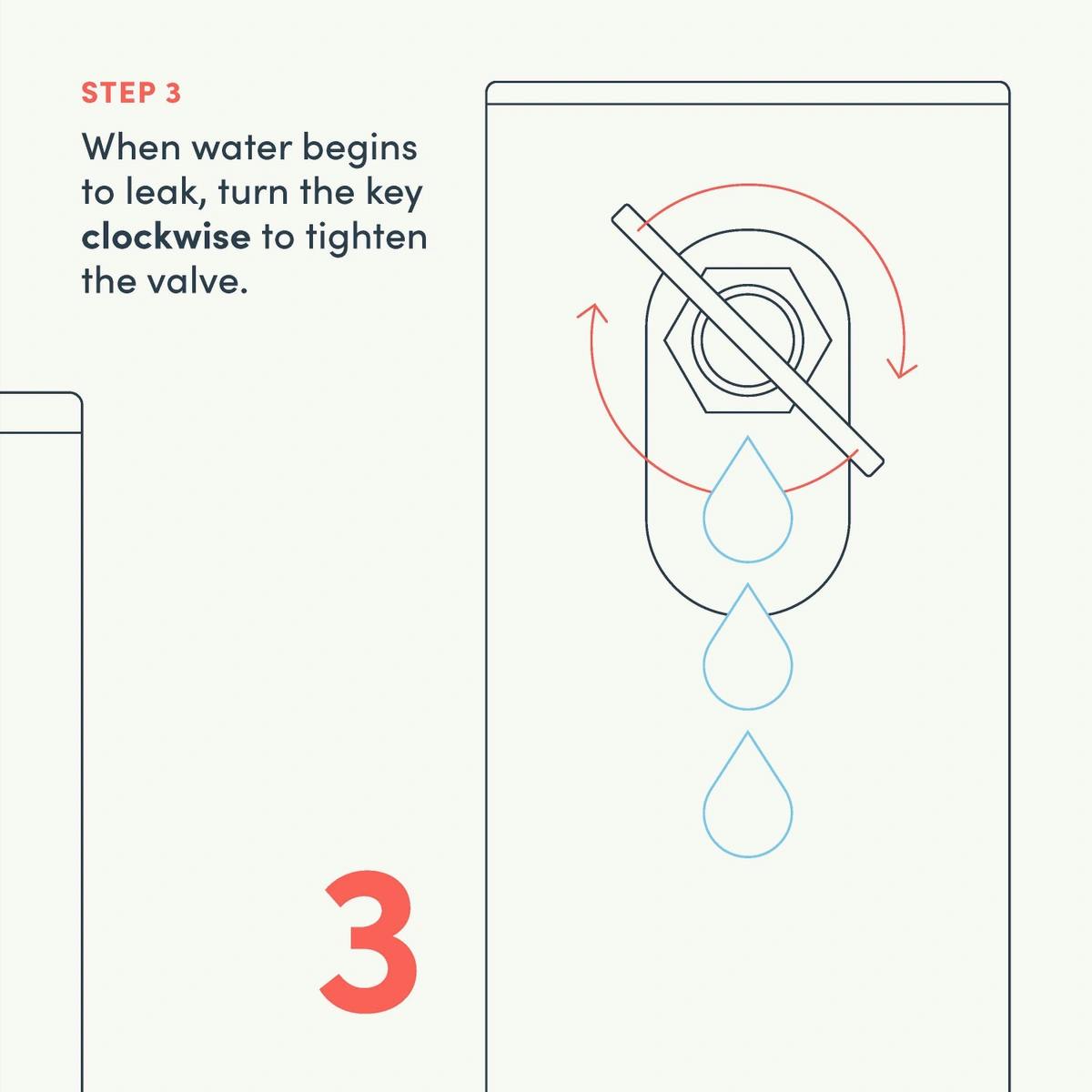
The first stream of water often sputters out of your radiator, as this is combined with air. Once all the trapped air has escaped, a steady stream of water will begin to leak from the valve. Now is the time to quickly tighten the key by turning it clockwise. Use your towel to wipe away any excess moisture from around the valve.

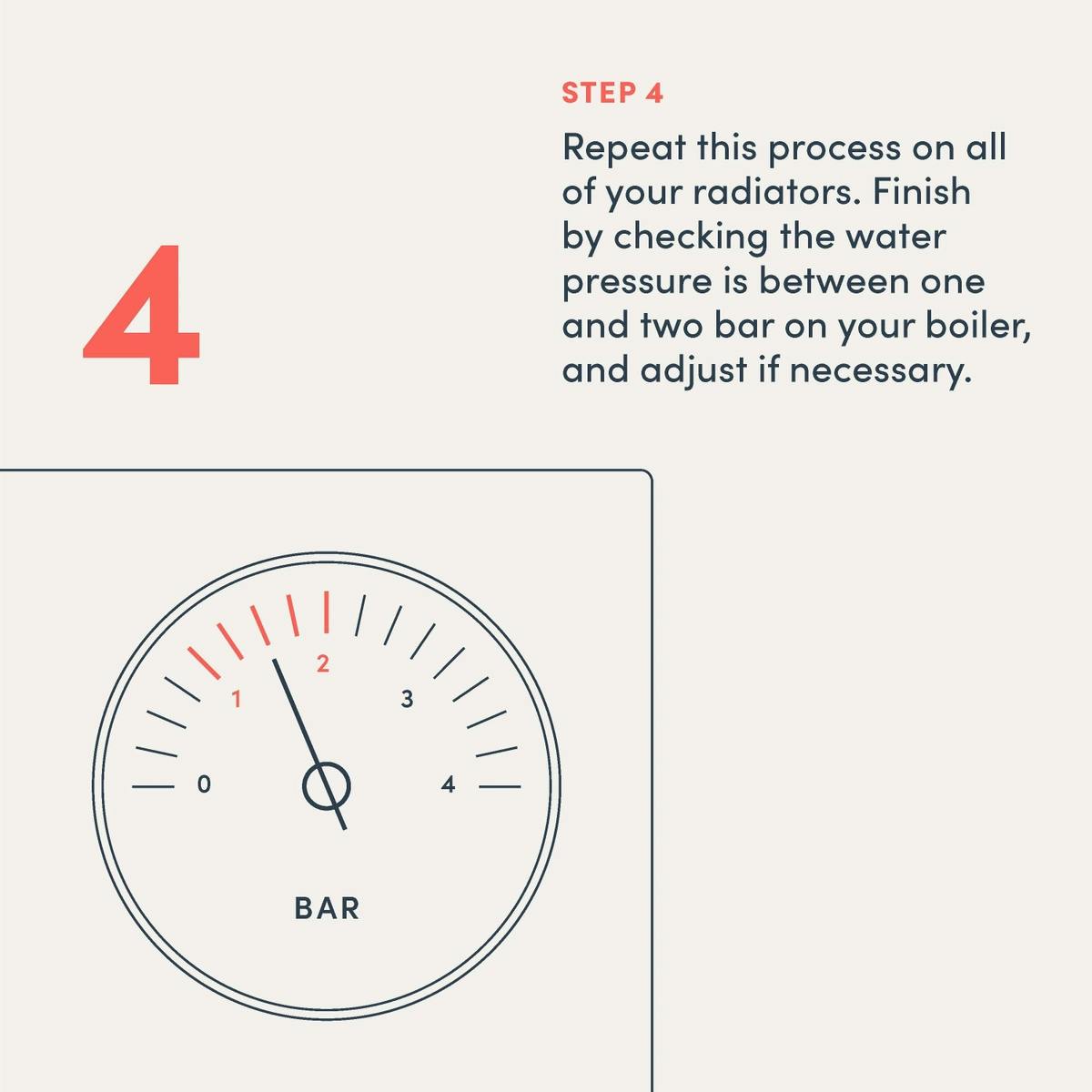
Step 4 – Repeat the process, then check your boiler’s pressure gauge
Repeat this process for any other radiators you have identified as needing to be bled. Afterwards, double-check your boiler's pressure gauge to ensure the needle rests comfortably between 1 and 2 bar. If not, re-pressurise. Then, when your heating is next on, check your radiators have no more cold patches. This way, you and your family can enjoy a warm home and save money on energy bills.

How to bleed a radiator without a key
If you don’t have a radiator bleed key, you can use a flat-head screwdriver instead. Follow the same steps as above for our guide on how to bleed a radiator with a key. But instead of using a radiator key, place the tip of your screwdriver in the slot in the middle of the radiator valve. Take care to avoid overtightening the valve after bleeding.

Do your radiators still have cold spots?
Radiator bleeding should be done at most twice a year. However, if you consistently experience cold radiators, despite regular bleeding, there may be a more serious underlying problem.
You can try to diagnose this issue by inspecting your boiler, pipes, and radiators for leaks. These may be identified as damp patches, puddles or unexplained rust marks.
Can’t find any leaks?
If any radiators are cold along the bottom, your central heating system may need to be flushed to eliminate the natural build-up of sludge and debris. This will allow hot water to flow without restrictions.
What's the difference between bleeding, flushing and balancing a radiator?
These three procedures ensure your central heating system operates optimally, and provides your home with efficient heating.
-
Bleeding a radiator means removing trapped air from a single radiator.
-
Balancing a radiator involves adjusting the flow of hot water to ensure the radiators around your home heat evenly.
-
Flushing a radiator removes the natural build-up of debris and sludge that accumulates inside radiators, reducing their efficiency.
Our team of local Gas Safe-registered engineers can help you safely bleed, drain, balance, flush, or power flush your system if it is severely blocked. Book online before 3pm for a fixed-price call-out as the next working day, or speak with our sales team on 0800 193 7777 for more advice.